Artikel KPKNL Palopo
Once Upon a Time in Our Public Service
Hayuningtyas Iga Siwi
Kamis, 18 September 2025 |
118 kali
Looking for an excellent service can be irritating. Foodies will
likely get furious when the menu item they order at a restaurant is not handed
over on time, while passengers whose flight is delayed may turn rude to the
airline ground crews. This kind of unsatisfying delivery can also be found a
lot in public services.
I have an unpleasant experience using public service. It might
be funny that as a government worker, I don’t really like dealing with public
services (!). My experience was when I had to come in person for some business to
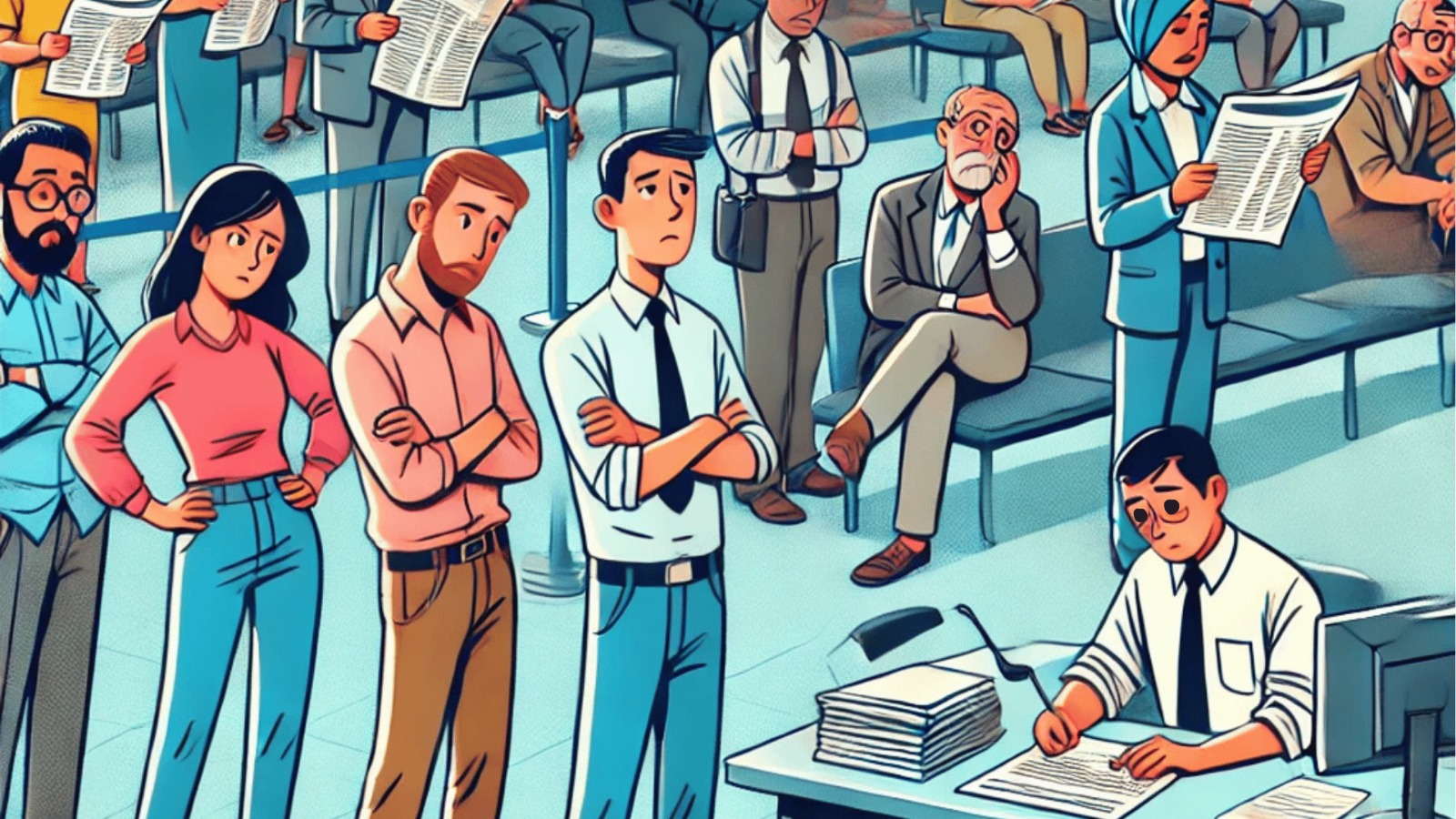
a subdistrict office years ago. I found myself standing tediously in a lengthy
line waiting for my turn to get serviced by an only staff. I felt emotionally exhausted
without having idea when I could reach the destination.
The frustrated customers like me might be calmed down should
the office open a second desk, just like what a shopping store I regularly
visit will do in the similar circumstance. Whenever there are more than three
shoppers with cart lining up, the store will provide new cashier to speed up the
service. Unfortunately, the subdistrict office didn’t have such a standard
operating procedure despite the presence of some other officers in the same room
who were literally doing nothing. They looked not to care at all of what was going
on. They were just reading newspaper or chatting each other (sometimes with laughs)
without having any sense of crisis to support the one providing the service.
Their attendance only made the situation even worse.
If these officers weren’t capable to deliver the job, they
must be hiding themselves anywhere else in the back office. By doing so, it is
true that they would remain worthless but at least they wouldn’t hurt the
awaiting guests with their lack of empathy. Compare with it: in Japan when
there are two groups working together in a project where one group’s turn will
come after another, the second group will be locked somewhere while waiting for
their turn. They can do whatever they want to do; they are merely not allowed
to spend time doing nothing in public space.
In a long queue, once the applicant eventually got the turn,
it wouldn’t necessarily solve their problem. Sometimes the servicing staff had
no willing to finish the job and in contrast, asked the applicant to come back
again later with some additional requirement. The thing was the extra document was
originally not listed as required document. It seemed that the guidance of what
documents should be brought while doing the application was unclear.
My experience exhibits the quality of public service in the
past: inefficient, slow-response, and time-consuming. Todays some particular
public services remain unchanged significantly, you either have to pay
additionally unofficial fee or get your case viral in social media in order to
receive attention and quick response. However, while people don’t like being
treated that way, they have no alternative to go. When we are disappointed with
a restaurant or an airline, we can stop using them anymore and rather shift to their
competitor. Whereas in public service government is the only provider, no other
contestant. No matter how poor the service is, people will come again and
again. It doesn’t encourage sense of urgency for improvement.
Furthermore, complication appears to be the nature of public
service. People have been familiar with the jargon in public service: if you
can make it complicated, you needn’t make it simple. Imagine you need to obtain
some licence, but you have to pass on a number of tables to get your business
done (quite often you need to go back and forth between tables). Service in
toll-road in the past may better describe the complication. Toll-road users between
Jakarta and Semarang used to pass multiple payment gates along the way. They
had to stop at gates in Cikampek (at km 70), Palimanan (km 181), and Kalikangkung
(km 414) in addition to their entrance and exit gates. In each gate, they
needed to halt to pay the fee. Reason behind these many gates? It was due to
different companies operating the toll-road, each held concession for different
section. Apparently, the companies didn’t like to bother themselves. They put
those gates for each section under different management to make it easy for
them to calculate toll-fee charged, yet at the cost of users’ convenience in a
way that the drivers should pause their travel several times. In the peak
season like Lebaran, it could create bottleneck and cause terrible traffic jam.
This issue was once raised by my friend Bayu, a political science senior
lecturer whom I met when we studied postgraduates. In his post in social media
he questioned the companies that couldn’t agree to set up a scheme enabling more
streamlined flow of the vehicles in the toll-road. Drivers were supposed to pay
the fee just one time for their entire trip, then the companies could coordinate
between them to share the revenue according to toll section taken by users. Now
it has slightly improved, there are fewer gates between those two cities.
Complication seems to be a wicked problem in our bureaucracy. Put the policy on small and medium enterprises for another example, there are 10 different ministries with their own program to facilitate SME. With this, redundancy and overlap are most likely to happen, which will in turn result in confusion for SMEs. Hence, you don’t need to wonder about coordination being a luxury in this country. Having three and then four coordinating ministries in the previous administrations doesn’t seem enough, so currently we add them up to 7 ministries tasked with simply coordinating others. We do hope it reflects the commitment for first class public service provision instead of a portrait of inefficiency.
Naf'an Widiarso Rafid - Kepala KPKNL Palopo
| Disclaimer |
|---|
| Tulisan ini adalah pendapat pribadi dan tidak mencerminkan kebijakan institusi di mana penulis bekerja. |